Kitchen Islands: Designing a Beautiful and Practical Centrepiece
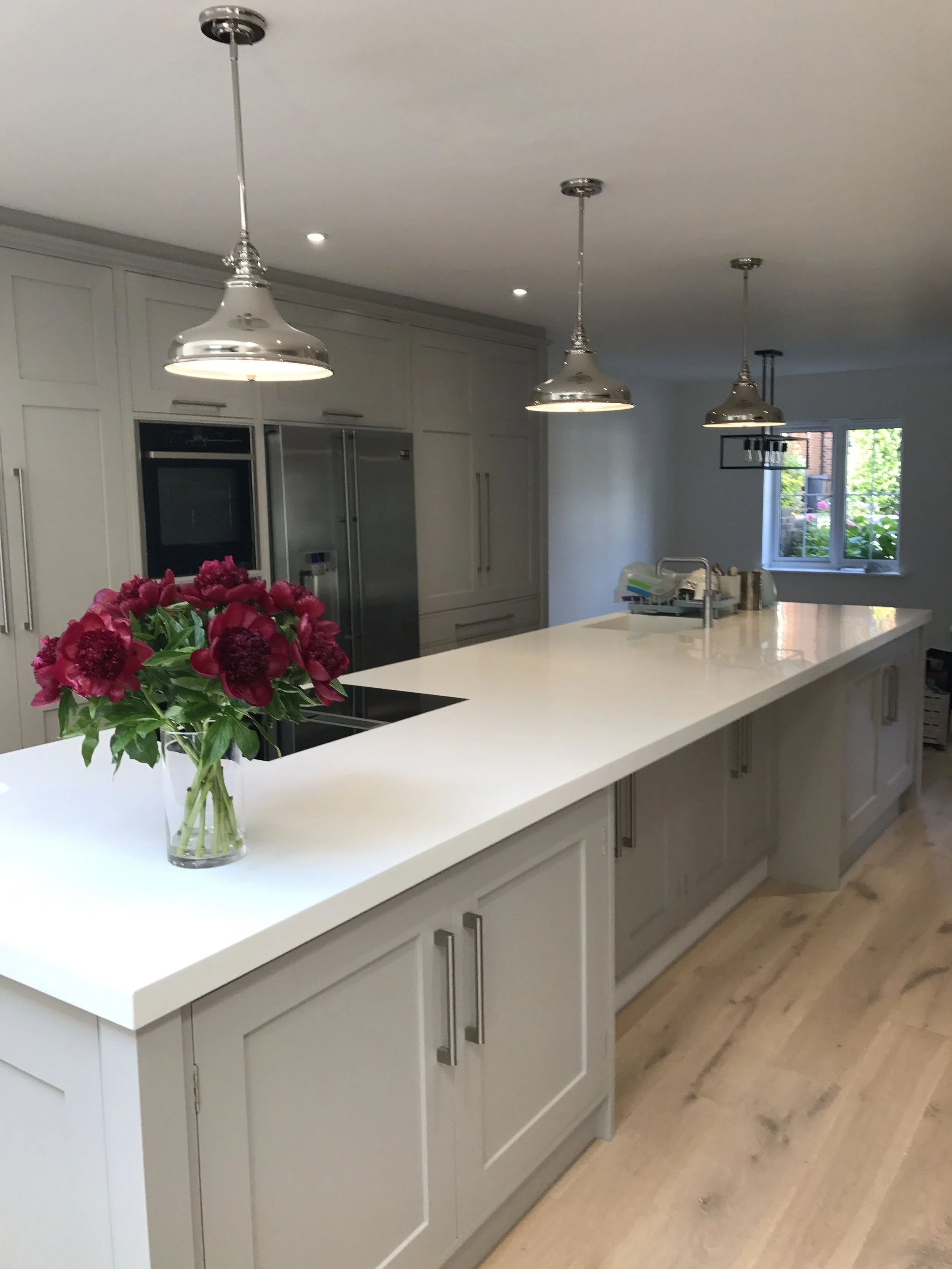
A well-designed kitchen island can become one of the most valuable features in a kitchen. More than an additional run of cabinetry or a generous piece of worktop, the island often becomes the place around which everyday life naturally revolves.
It is where food is prepared, children sit doing their homework, guests gather while dinner is being made and conversations continue long after a meal has finished. But getting a kitchen island right is about far more than simply finding enough space to fit one.
At Jonathan Reynolds Ltd, we believe the most successful kitchen islands are designed as part of the room from the outset. Their proportions, position, storage, materials and relationship with the rest of the kitchen should all be carefully considered to create a space that feels effortless to use.
What Makes a Good Kitchen Island?
The best kitchen islands are not necessarily the largest. In fact, an oversized island can make a kitchen feel uncomfortable if it restricts movement or leaves insufficient space around the surrounding cabinetry.
Instead, the starting point should be how you use the room.
Do you enjoy cooking and need a generous preparation surface? Would additional drawers make everyday storage easier? Is informal seating important for family life? Do you regularly entertain and want guests to be able to sit nearby without getting in the way?
These practical questions should shape the design.
A bespoke kitchen island can be created around the answers, rather than forcing your lifestyle to fit a standard-sized unit.
Kitchen Island Design and Proportion
Proportion is particularly important when designing a kitchen island.
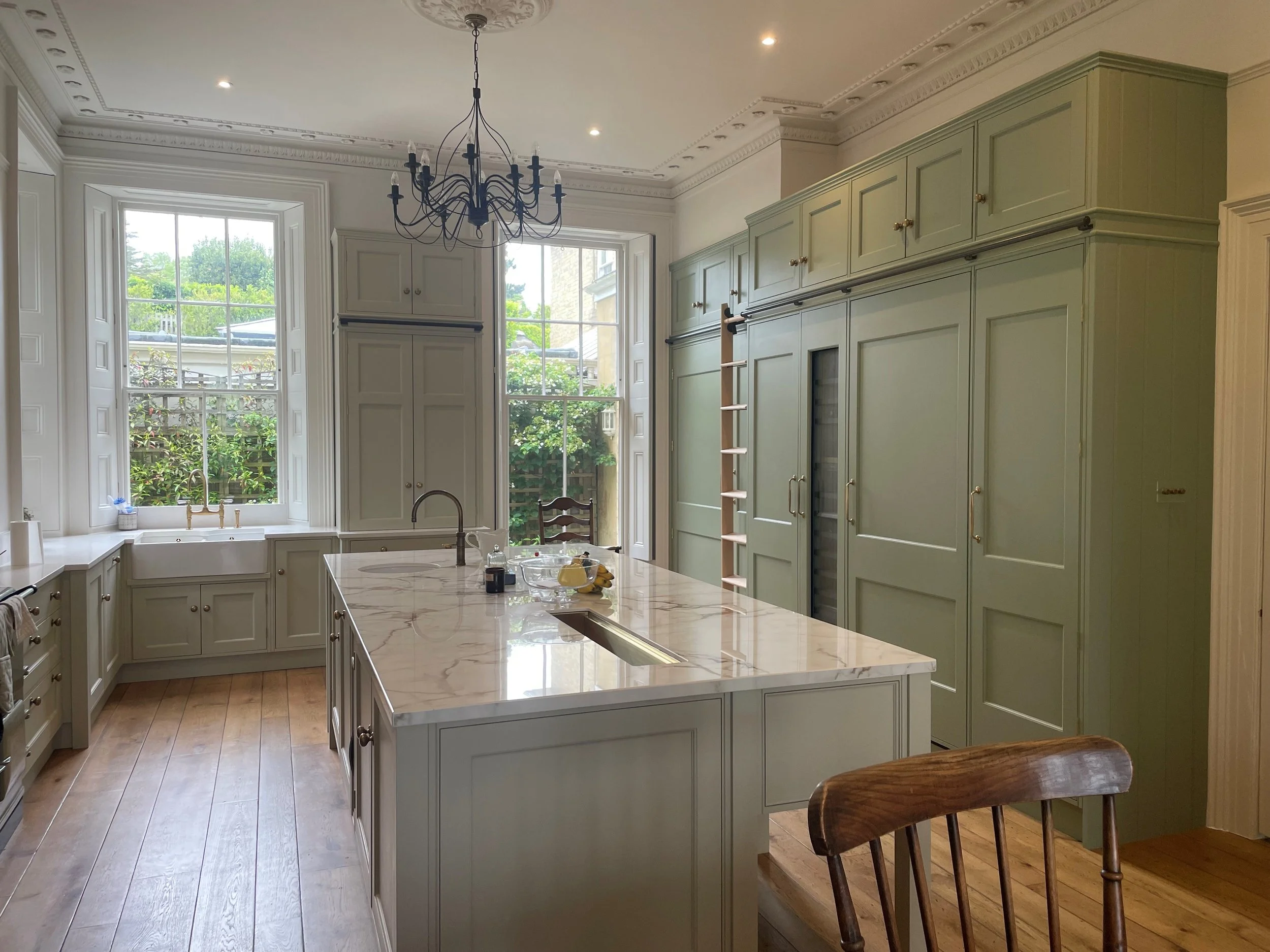
An island needs to feel connected to the architecture of the room while retaining enough space around it for people to move comfortably. This becomes especially important in period homes, where rooms can have unusual dimensions, architectural features or established sightlines that need to be respected.
In a larger kitchen, an island might provide a substantial preparation area with seating at one end. In a more compact room, a smaller island or peninsula may offer many of the same benefits without overwhelming the space.
The aim is always balance.
A beautifully designed island should feel as though it belongs in the room rather than appearing to have been added simply because an island is fashionable.
Creating More Useful Kitchen Storage
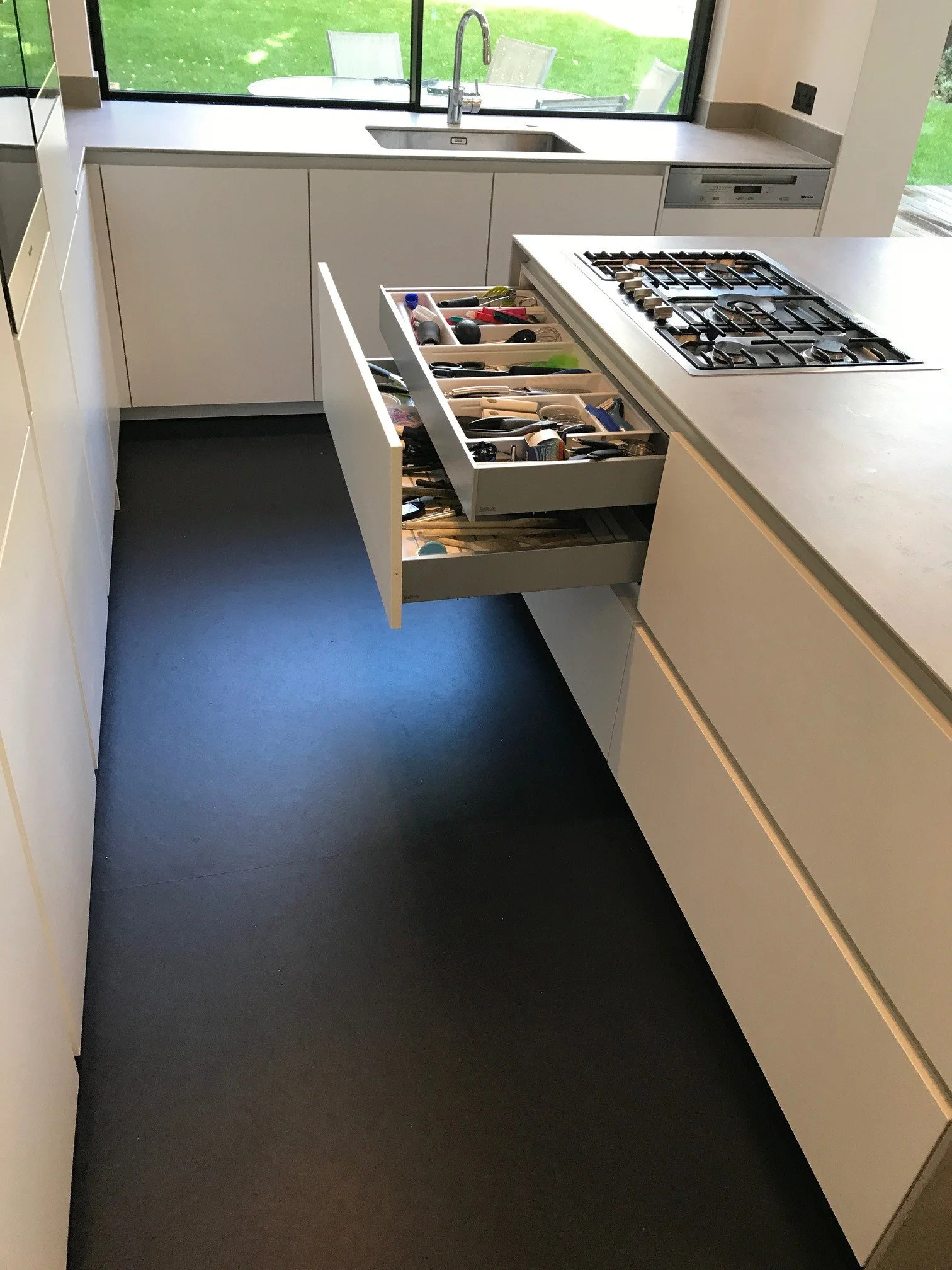
One of the most practical advantages of a kitchen island is the opportunity to introduce additional storage exactly where it is needed.
Deep drawers can provide convenient access to pans, crockery or everyday kitchen equipment, while cupboards can accommodate less frequently used items. Depending on the design, an island can also incorporate specialist storage for bottles, baking equipment or small appliances.
This can help keep the surrounding worktops clear and create a calmer visual appearance.
For a bespoke kitchen, storage can be designed around the individual household rather than based on a predetermined cabinet configuration. That means considering not only how much storage you need, but where you naturally reach for things and how the kitchen is used throughout the day.
Good storage should make life easier without drawing attention to itself.
Should a Kitchen Island Include Seating?
For many homeowners, seating is an important part of the kitchen island design.
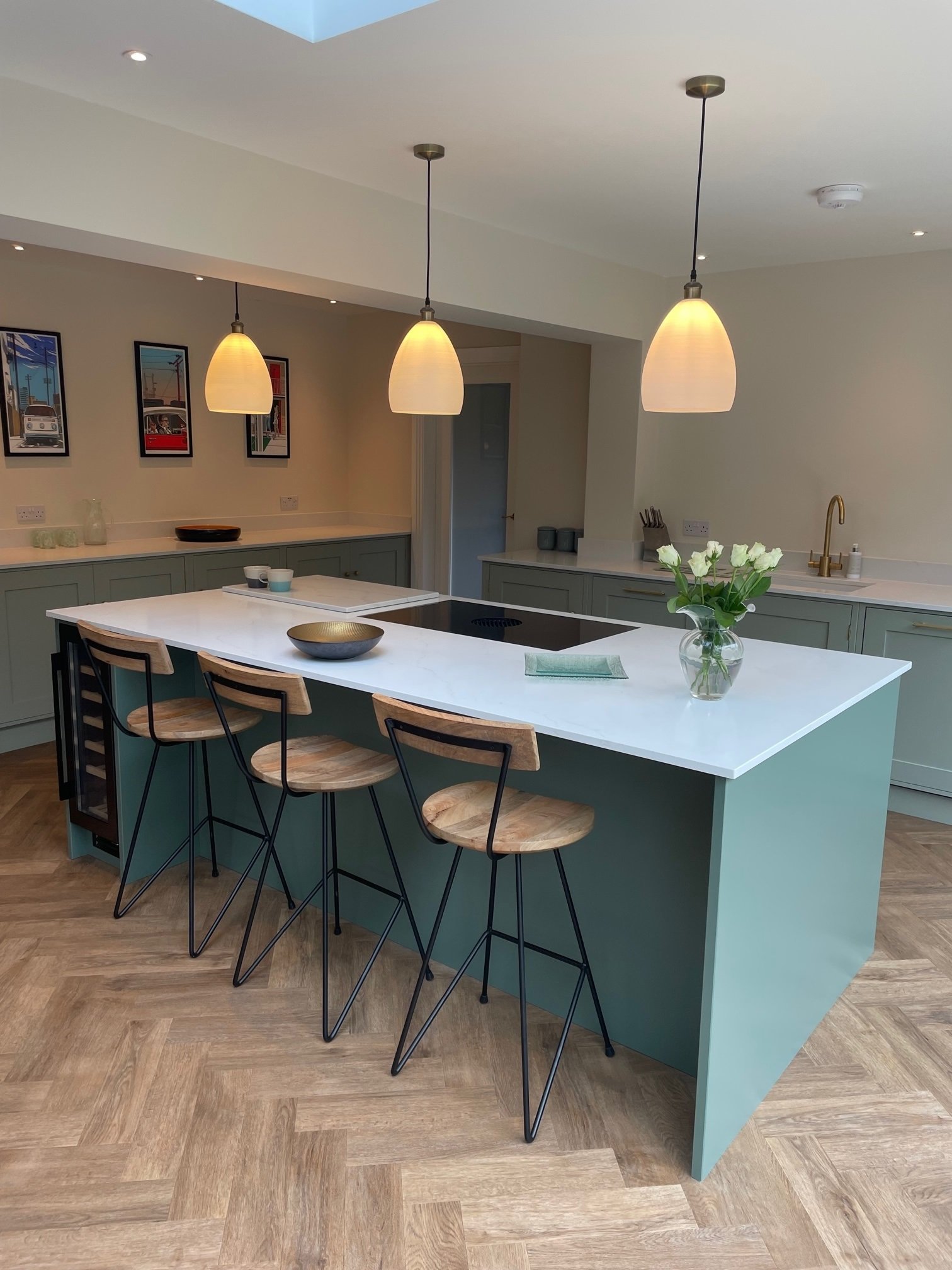
A carefully planned overhang can create an informal breakfast bar or a comfortable place to sit with a coffee. It can also turn the island into a natural social space when entertaining.
However, seating needs to be considered alongside the practical functions of the island. The position of stools, the depth of the worktop and the amount of space behind the seating all influence how comfortable the finished arrangement will be.
In family kitchens, this can be particularly valuable. The island may become the place where children have breakfast, homework is completed or friends gather while food is being prepared.
The result is a kitchen that works just as well socially as it does practically.
Choosing Materials for a Bespoke Kitchen Island
A kitchen island offers an opportunity to introduce subtle contrast.
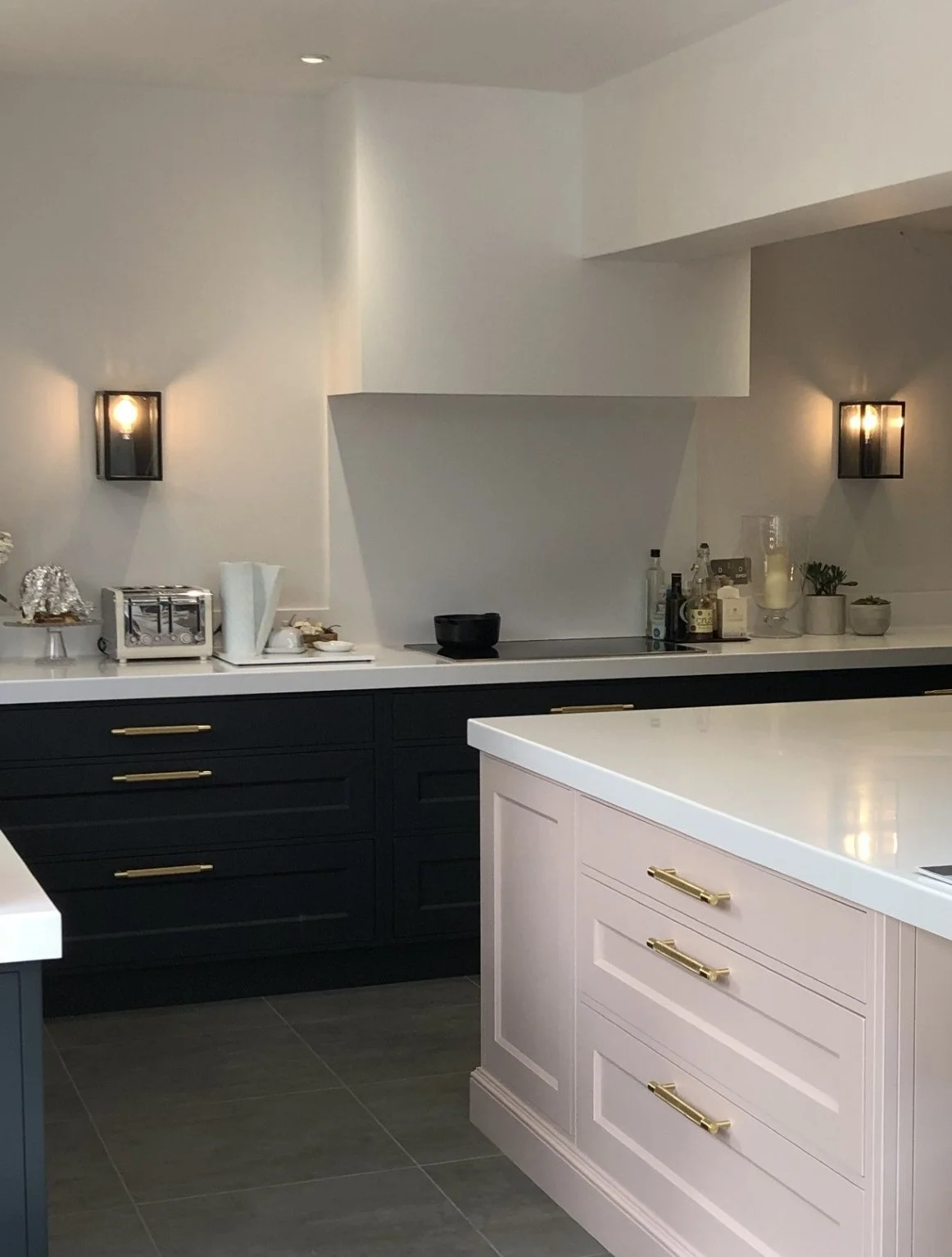
Rather than matching every element of the kitchen exactly, the island can be differentiated through colour, timber, worktop material or detailing. A painted island against lighter cabinetry can create a gentle focal point, while natural timber can introduce warmth and texture.
In more contemporary kitchens, a carefully selected stone worktop can create a strong architectural presence. In a traditional setting, painted cabinetry, natural materials and considered detailing can help the island sit comfortably within the character of the property.
The important thing is cohesion. Contrast should feel deliberate rather than decorative for its own sake.
Handles, lighting, worktops and cabinetry should all contribute to the same overall design language.
Kitchen Islands in Kent and London Homes
The homes across Kent and London offer very different opportunities for kitchen island design.
A period property in Tunbridge Wells or Sevenoaks may call for an island that respects existing architectural details, while a Victorian home in Beckenham or a London property in Clapham or Putney may require a more space-conscious approach.
Contemporary extensions can provide greater freedom, allowing a kitchen island to become an architectural focal point that connects the kitchen with dining and living spaces.
Whatever the property, the principle remains the same: the island should respond to the room rather than dictate it.
A Kitchen Island Designed Around You
A kitchen island can transform the way a kitchen looks and functions, but its success ultimately comes down to thoughtful design.
The right island can provide valuable storage, generous preparation space, informal seating and a natural place for people to gather. More importantly, it can help define how the entire kitchen works.
At Jonathan Reynolds Ltd, every kitchen is personally designed around the home and the people who live in it. With more than 30 years of experience designing kitchens across Kent and London, Jonathan takes time to understand how a space needs to function before considering the details that will give it character.
Whether you are planning a traditional kitchen for a period property or a contemporary space within a new extension, a bespoke kitchen island should be considered as part of the whole room.
Because the best kitchen islands are not simply impressive to look at.
They make the kitchen work better, feel better and become a more natural part of everyday life.
Planning a Bespoke Kitchen Island?
If you are considering a new kitchen island as part of a kitchen renovation or a completely new bespoke kitchen, the design should begin with your home, your routines and the way you want to use the space.
Based in Hildenborough, Kent, Jonathan Reynolds Ltd works with homeowners across Kent and London to create individually designed kitchens that balance practicality, proportion and timeless style. Every project begins with a conversation, allowing the design to evolve around the people who will ultimately live with it.
A well-considered kitchen island can become much more than a centrepiece. It can become the place where the kitchen truly comes to life.