A Shaker kitchen has an enduring appeal that few other styles can match. Defined by clean lines, framed cabinetry and understated detailing, it has remained popular for generations because of its simplicity, proportion and versatility.
What makes the Shaker style so successful is its ability to adapt. It can feel traditional or contemporary, depending on the proportions, materials, colour palette and detailing used.
For Jonathan, the key is not to reproduce a formula, but to interpret the principles of Shaker design in a way that feels right for the individual home.
Whether used in a period property or a more contemporary setting, a well-designed Shaker kitchen should feel considered, balanced and completely at home in its surroundings.
What defines a Shaker kitchen?
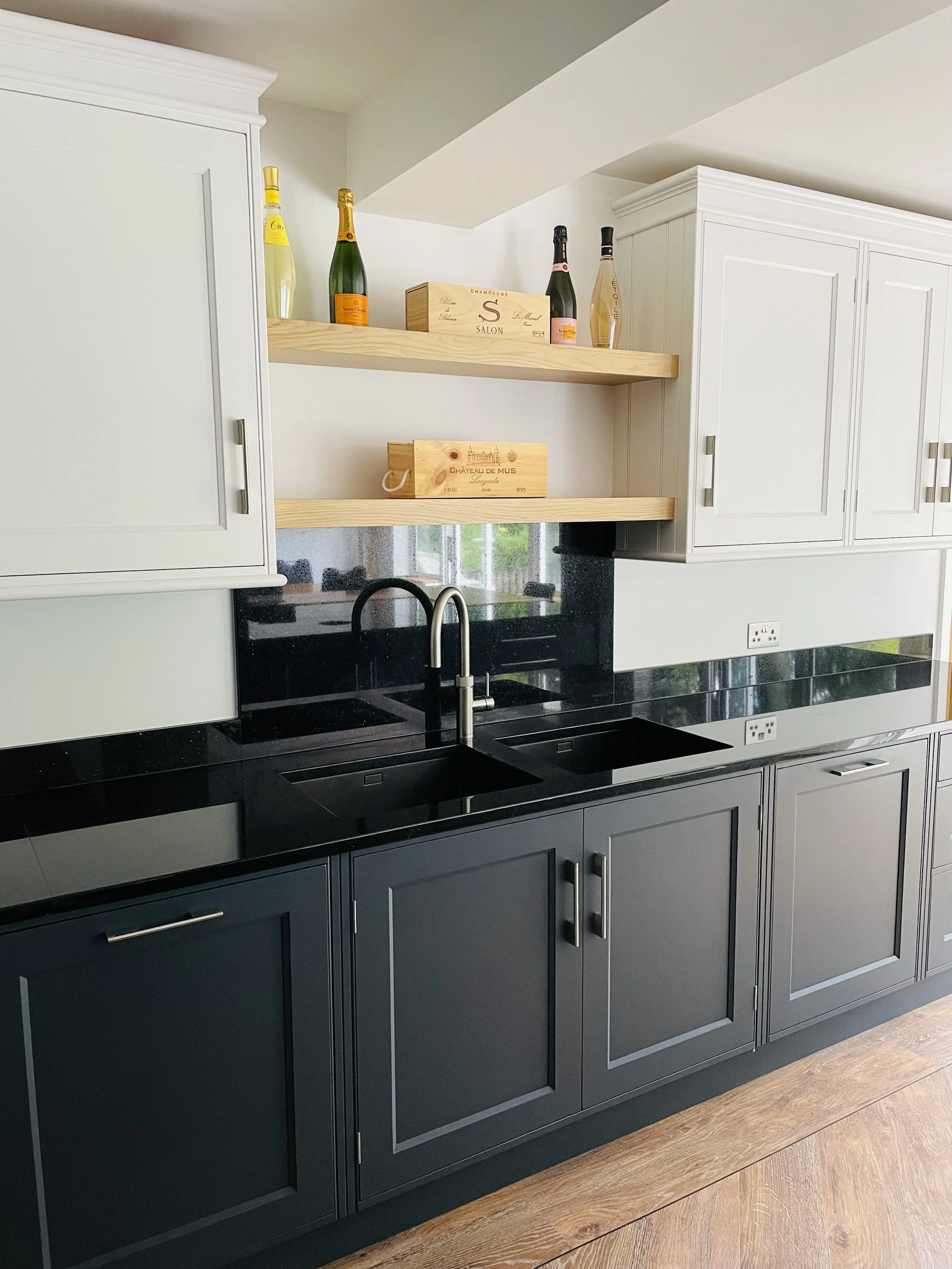
At its heart, Shaker design is about simplicity, balance and proportion.
Traditionally, Shaker cabinetry features a framed door with a recessed central panel and very little unnecessary decoration. This allows the quality of the materials, craftsmanship and proportions to take centre stage.
That restraint is one of the reasons the style has endured for so long.
A well-designed Shaker kitchen can feel traditional without becoming old-fashioned, while colour, materials and detailing can give the same classic framework a much more contemporary character.
It works beautifully with natural timber, painted cabinetry, stone worktops and traditional hardware, but can just as easily be paired with modern finishes, integrated lighting and contemporary appliances.
The result is a kitchen style with remarkable flexibility — one that can be interpreted in many different ways without losing its essential character.
Why choose a bespoke Shaker kitchen?
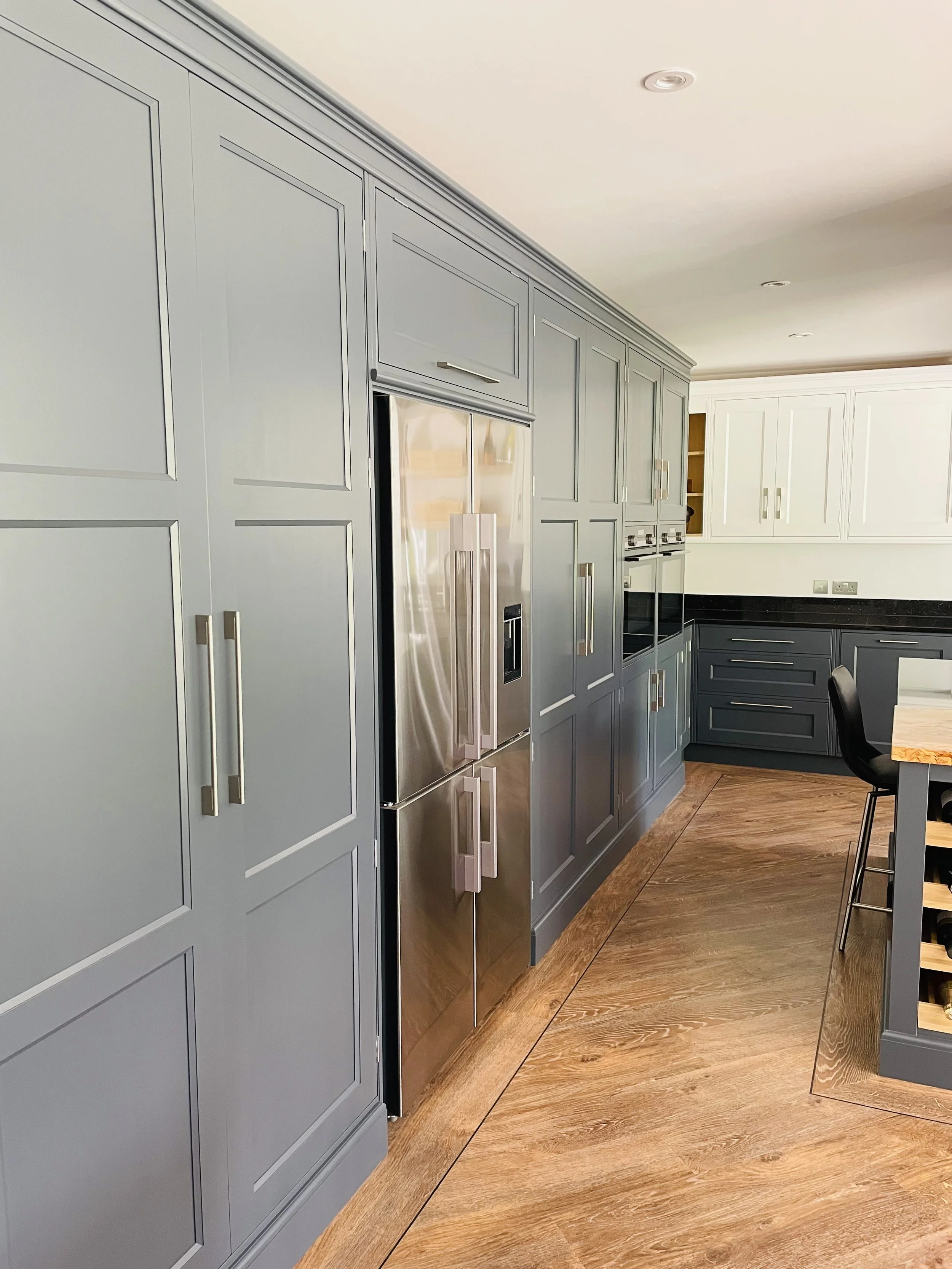
A Shaker kitchen may appear simple, but the quality of the finished room depends heavily on proportion, detailing and how the cabinetry is designed for the space.
With a bespoke kitchen, door widths, panel sizes, cabinetry heights and storage can all be tailored to suit the room rather than being dictated by standard sizes.
This gives Jonathan much more freedom to respond to awkward walls, chimney breasts, ceiling heights and the individual proportions of the house.
It also means practical details can be resolved properly — from appliance positioning and internal storage to seating, lighting and the relationship between the kitchen and adjoining rooms.
The result is a Shaker kitchen that feels as though it belongs in the house, rather than one that has simply been fitted into it.
Making a Shaker kitchen work harder
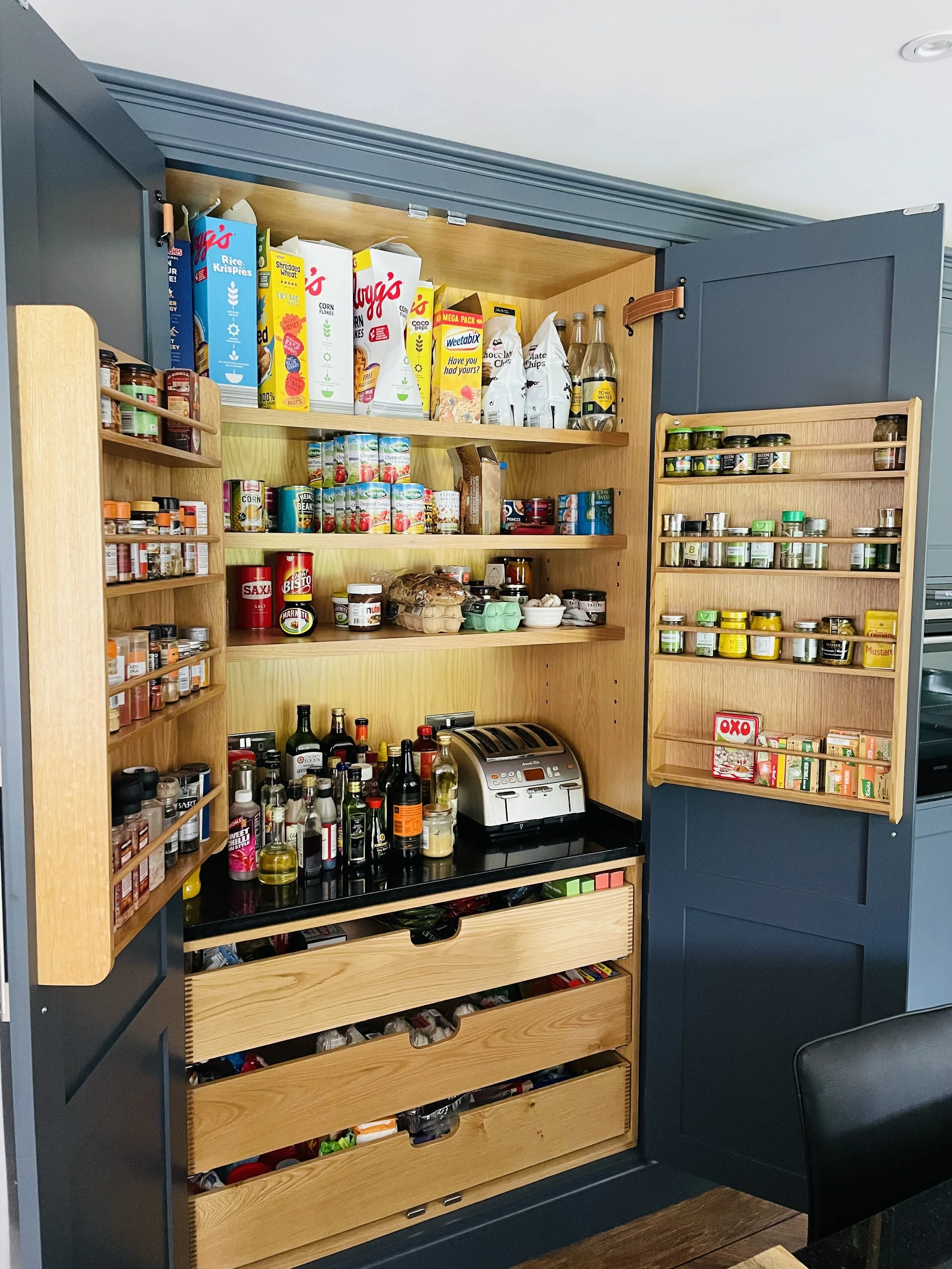
The best kitchens are rarely defined by one standout feature. More often, they are the result of many small decisions working well together.
Storage should be where you need it, preparation areas should support the way you cook, and appliances should feel naturally integrated. The overall layout should also allow people to move comfortably through the room.
A bespoke Shaker kitchen can incorporate everything from generous larder cupboards and deep drawers to breakfast cupboards, integrated appliances and carefully planned islands.
The aim, though, is not simply to include more. It is to make each element earn its place.
In one home, the priority may be additional worktop space. In another, it may be improved storage, a better connection with a dining area or a layout that works more naturally around the architecture of the house.
That is where bespoke design really comes into its own: shaping the cabinetry and storage around the individual room rather than asking the room to fit a standard solution.
Shaker kitchens for period and contemporary homes
One of the strengths of Shaker design is its ability to work across very different types of property.
In a period home, carefully proportioned cabinetry, natural materials and softer painted finishes can sit comfortably alongside original architectural details without feeling overly traditional.
In a more contemporary home or extension, the same Shaker principles can be simplified and refined through cleaner lines, restrained colour palettes and more modern hardware.
The style is flexible enough to feel established in an older house and equally at home in a newer setting.
The key is not simply choosing a Shaker door, but understanding how the proportions, materials and detailing should respond to the individual property.
Adapting Shaker design to different spaces
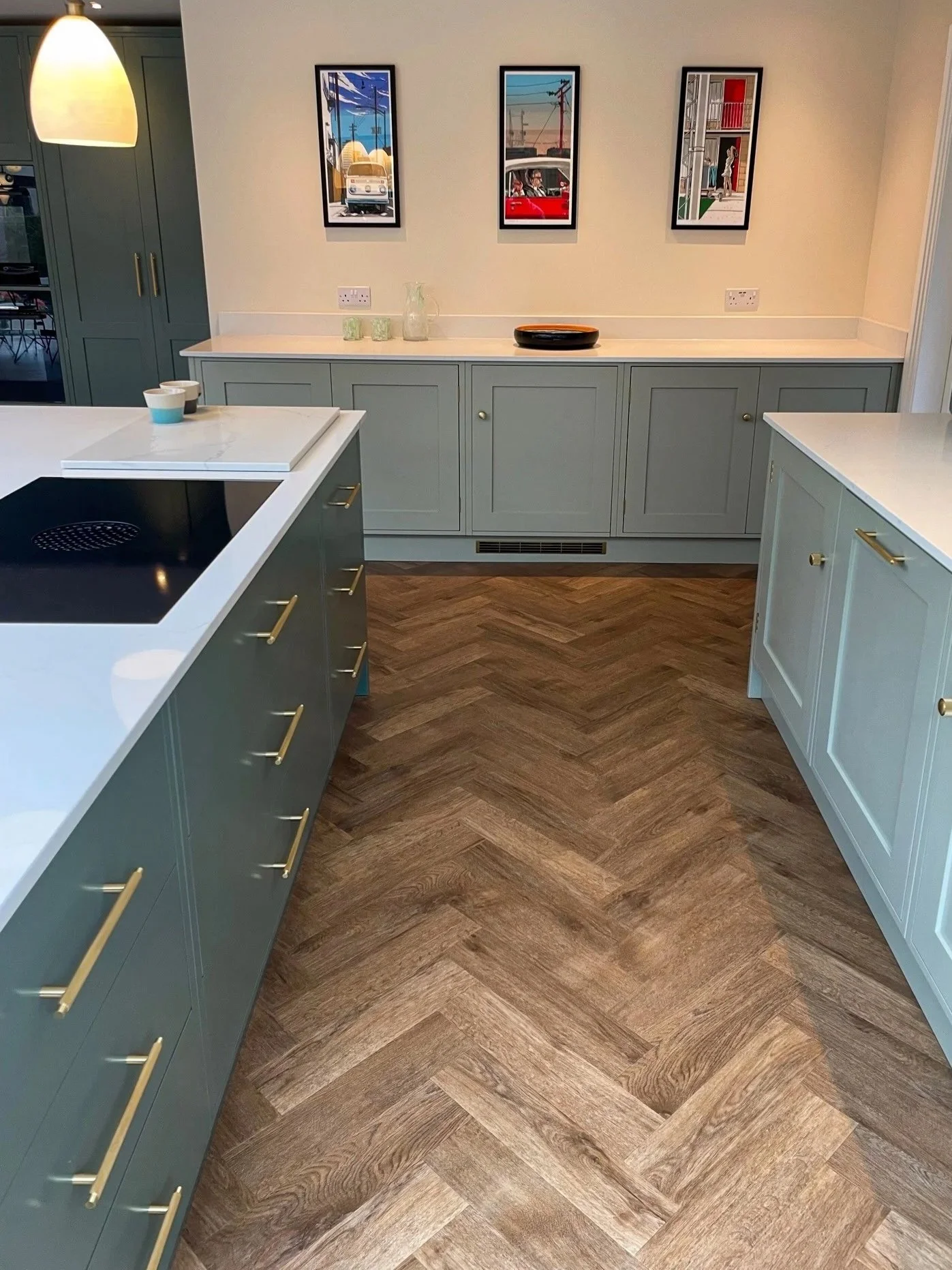
Some homes call for a more carefully tailored approach, particularly where space is limited or the proportions of the room are less straightforward.
A well-designed Shaker kitchen can be adapted to make the most of the available space without making the room feel crowded. Cabinetry can be carefully proportioned to suit the architecture, while storage is planned around the way the household actually uses the kitchen.
The style also works particularly well where traditional architecture meets a more contemporary extension or interior, allowing the kitchen to feel connected to both.
That flexibility is one of the reasons Shaker design continues to work so well across such a wide range of homes.
Choosing colours and materials
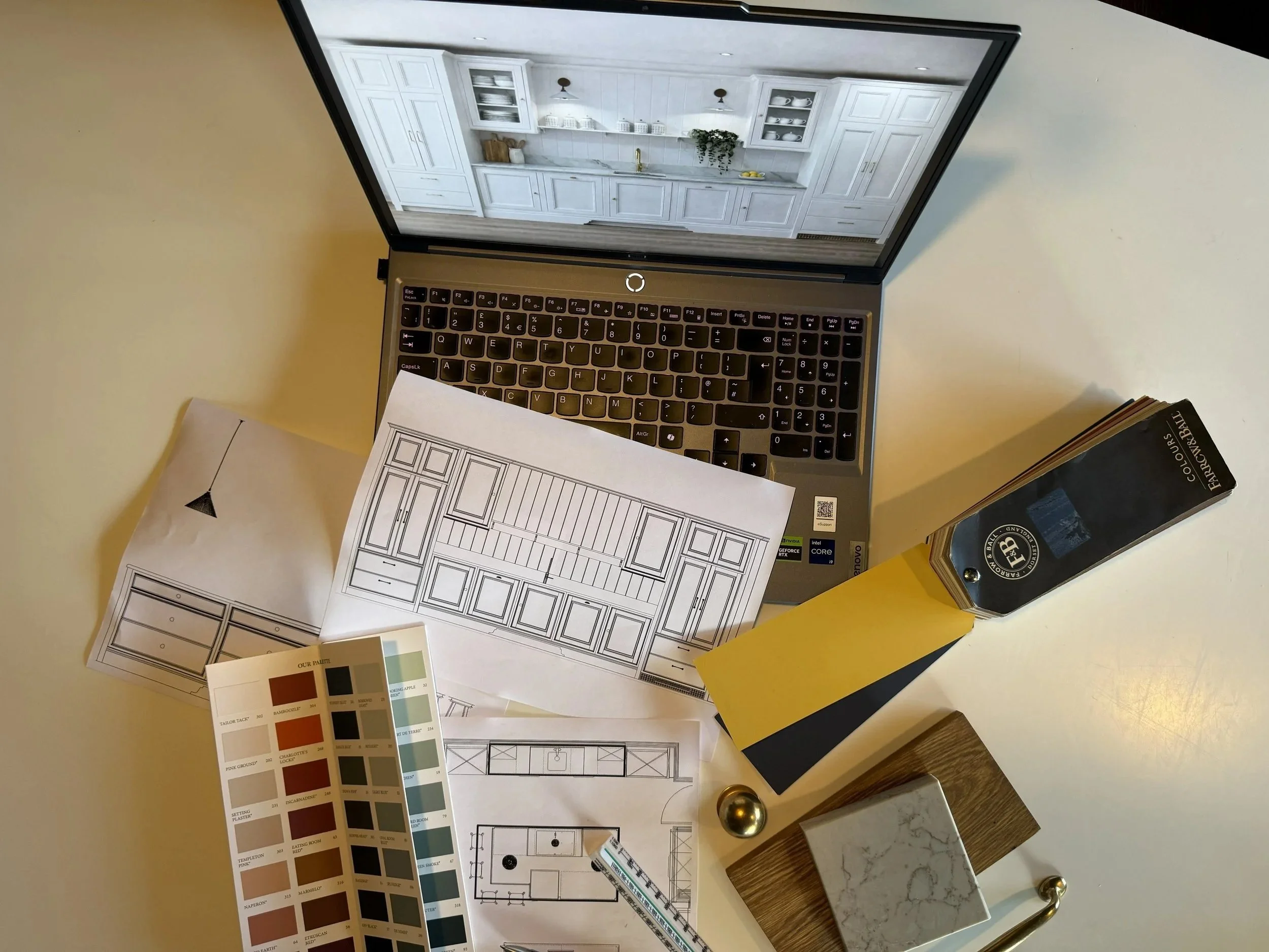
One of the pleasures of designing a Shaker kitchen is deciding how the style should be interpreted.
Colour has a strong influence on the atmosphere of the room. Softer neutrals can create a calm, understated feel, while deeper tones can add richness and character.
A contrasting island can introduce a natural focal point, while timber, stone and carefully chosen hardware bring warmth and texture.
The smaller details matter too. Handles, worktops, lighting and the interiors of cupboards all influence how the finished kitchen feels.
For Jonathan, the aim is to bring those choices together so the room feels balanced rather than over-designed — with each element contributing to the whole.
A Shaker kitchen, personally designed
A kitchen is one of the most important investments you can make in your home, so it should offer more than immediate visual impact.
The best kitchens continue to work beautifully over time because their layout, proportions, materials and detailing have been carefully considered from the outset.
With more than 30 years of experience designing kitchens and interiors across Kent and London, Jonathan personally designs every project and remains closely involved throughout the key stages of the process.
A Shaker kitchen may begin with a familiar design language, but the finished room should feel completely individual to the house and the people who live there.
Because the right kitchen is not chosen from a brochure.
It is shaped through conversation.
Start the conversation
If you are considering a bespoke Shaker kitchen for your home, Jonathan Reynolds Ltd offers a thoughtful and personal approach to kitchen design.
Based near Sevenoaks, we work with homeowners across Kent and London, creating kitchens that balance practicality, proportion and quiet attention to detail.
Every project begins with a conversation about your home, your ideas and what you want the space to achieve.
The result is a Shaker kitchen that feels carefully resolved, individual and entirely at home in its surroundings.