The materials chosen for a bespoke kitchen do far more than determine its appearance. They influence how a room feels, how it functions and how beautifully it will age. From the natural character of a stone worktop to the warmth of timber and the subtlety of painted cabinetry, every surface contributes to the overall design.
With so many materials and finishes available, knowing where to begin can feel daunting. Natural stone, engineered surfaces, timber and specialist cabinetry finishes each have their own qualities and understanding how they work together is just as important as choosing them individually.
A thoughtfully designed kitchen is rarely about one particular material. It is the balance between different textures, colours and finishes that creates a room with character, one that feels entirely at home within its surroundings.
At Jonathan Reynolds Ltd, material selection forms an integral part of the design process. Every choice is considered in relation to the architecture of the property, the people who live there and the practical demands of everyday life.
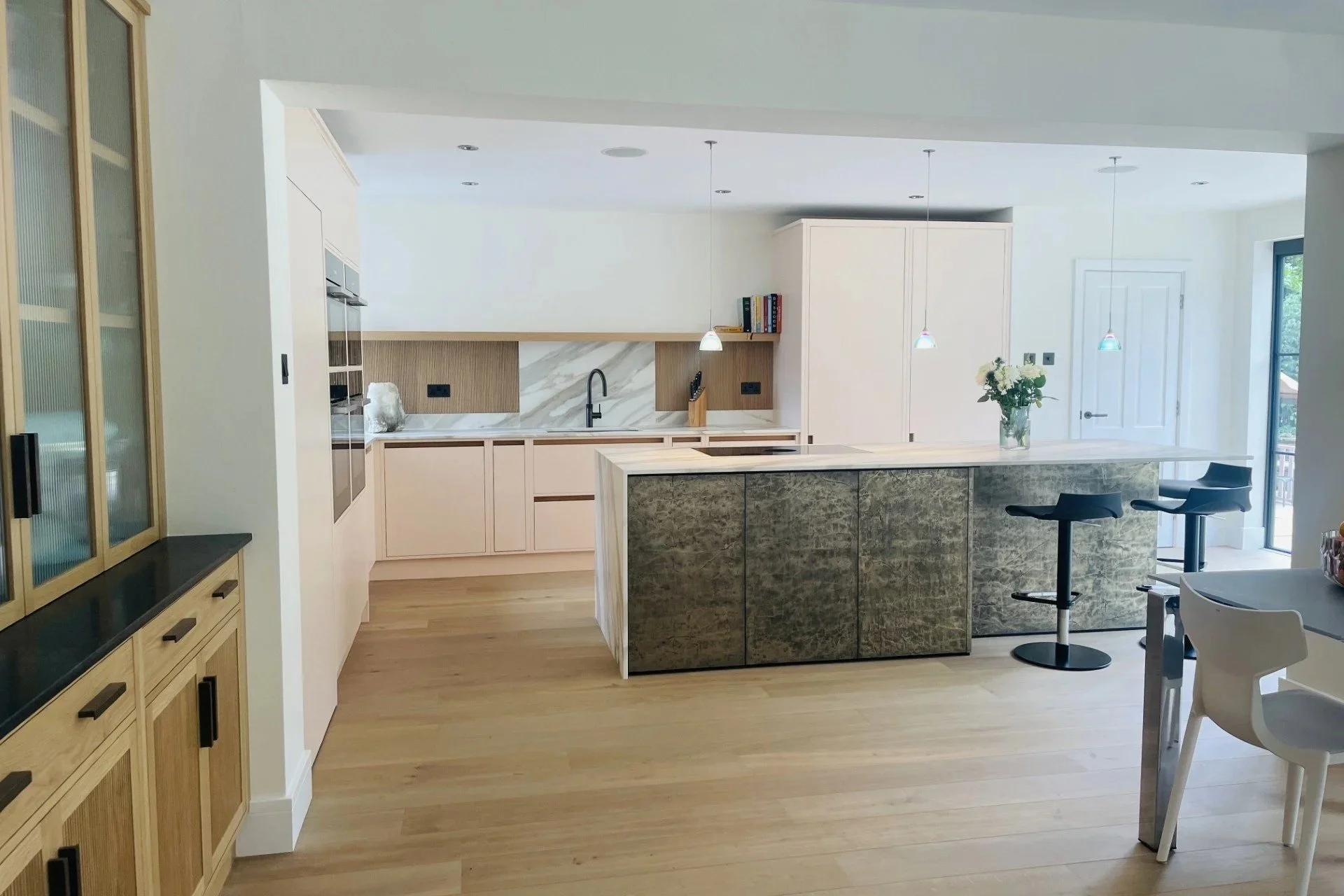
Start with how the kitchen will be used
Before choosing colours or looking at worktop samples, it is worth considering how the kitchen will be used on an ordinary day.
A household that enjoys cooking regularly may have different priorities from one where the kitchen is primarily a space for entertaining. A busy family home might benefit from forgiving surfaces that withstand frequent cleaning, while a keen cook may place greater emphasis on generous preparation areas and materials that are easy to maintain.
Different areas of the kitchen also experience different levels of wear. Worktops surrounding sinks and hobs must cope with moisture, heat and everyday use, while cabinetry needs finishes that withstand repeated handling.
Understanding these practical requirements from the outset helps ensure that material choices are both beautiful and appropriate.
Natural stone: individuality and character
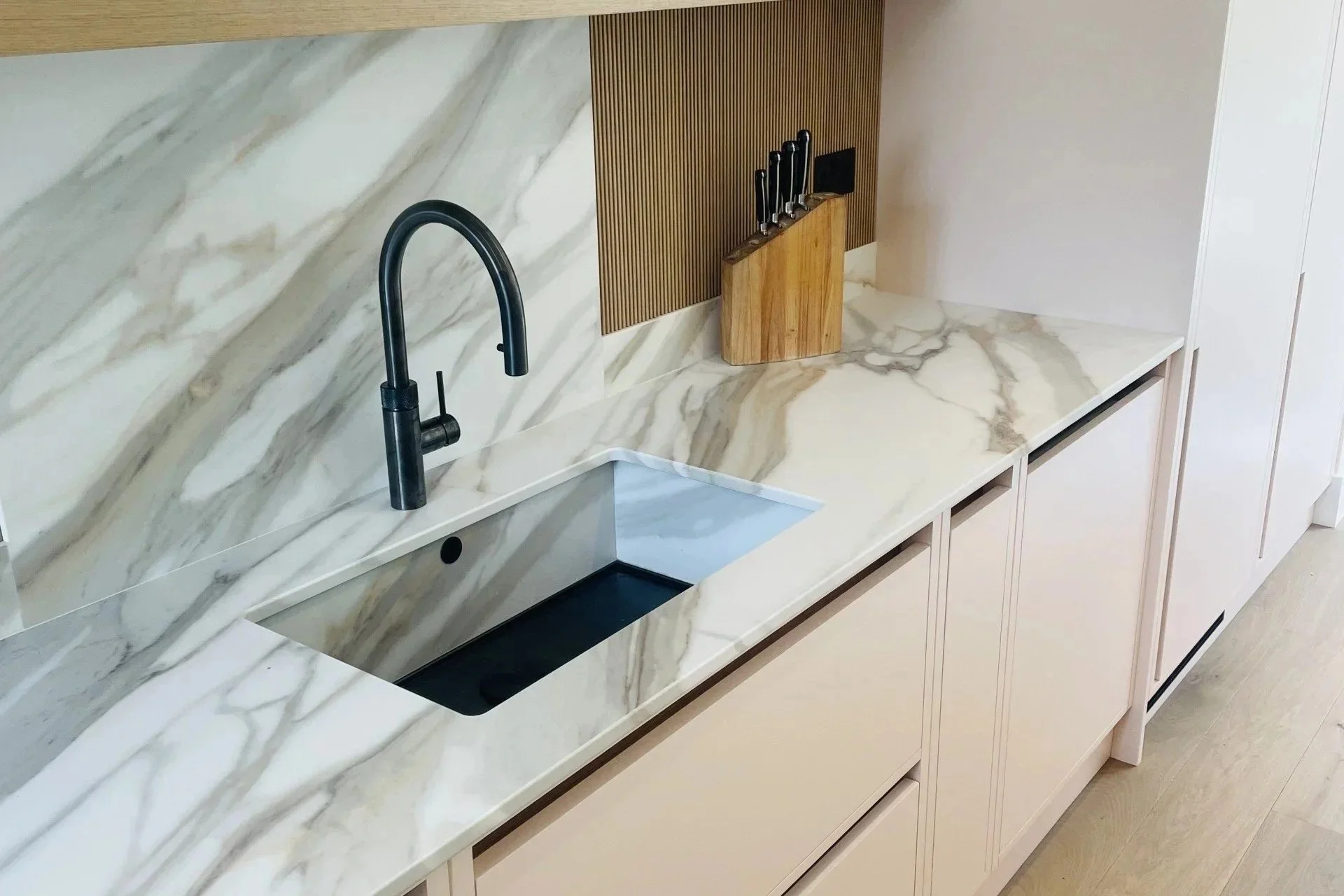
Few materials offer quite the same depth and individuality as natural stone. Marble and granite each have distinctive markings, subtle colour variations and patterns that make every slab unique.
Marble is particularly admired for its elegant veining and softness of appearance. It can bring a quiet sophistication to a contemporary kitchen or compliment the architectural detailing of a more traditional home. However, marble is susceptible to staining and etching from acidic ingredients, making it important to understand how the surface will change with use.
Granite generally offers greater resistance to heat and everyday wear, with an extensive range of colours and natural patterns. It can be particularly suitable for working areas where durability is a priority.
One of the pleasures of working with natural stone is its individuality. Viewing the actual slabs, rather than relying solely on small samples, allows the movement of the veining and variations in colour to become part of the design.
Engineered quartz and porcelain: practicality and precision
For those who prefer a more consistent appearance, engineered surfaces can offer a practical alternative to natural stone.
Engineered quartz combines natural quartz particles with resins and other materials to create a surface available in a wide variety of colours and patterns. Its relatively low porosity makes it straightforward to maintain, although care should be taken with excessive heat.
Porcelain offers excellent design flexibility, with finishes that can replicate the appearance of natural stone or create a more contemporary effect. Its resistance to heat, stains and scratches makes it an appealing choice, although performance depends on the individual product and appropriate installation.
Large-format slabs can create a beautifully uninterrupted surface, particularly where a worktop continues upwards to form a splashback.
With either material, careful attention to thickness, edge profiles, joints and fabrication is essential. These details may seem small, but they can have a significant influence on the finished result.
Timber: bringing warmth and texture
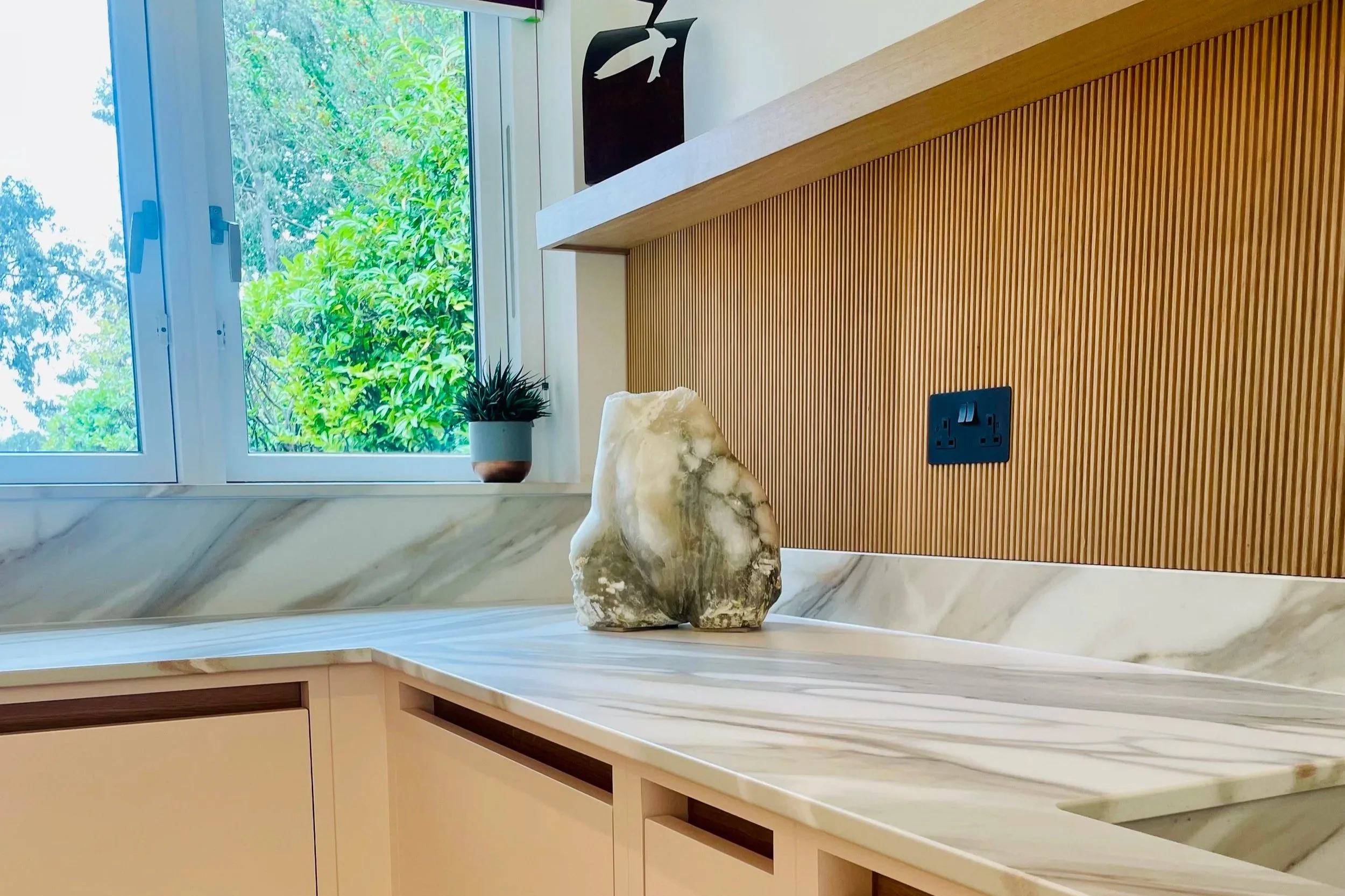
Timber has an enduring appeal in kitchen design. Its warmth, grain and natural variation provide a welcome contrast to harder surfaces such as stone, porcelain and metal.
Oak is particularly versatile, complimenting both painted cabinetry and more contemporary finishes. Walnut introduces a deeper, richer tone, while lighter timbers can bring softness to a restrained interior.
Timber does not necessarily need to dominate a scheme. An oak-lined cabinet, open shelving or a carefully detailed breakfast bar can introduce warmth and texture without overwhelming the room.
As a natural material, timber responds to changes in humidity and temperature and requires appropriate protection, particularly where moisture is present.
Used thoughtfully, it can also help a kitchen feel less like a collection of fitted units and more like furniture that belongs within the home.
Cabinetry finishes: looking beyond colour
Cabinetry occupies a substantial proportion of most kitchens, making its finish one of the most influential decisions in the design.
Painted cabinetry offers enormous flexibility, allowing colours to be selected in response to the architecture, natural light and adjoining interiors. It can suit a traditional country kitchen just as comfortably as a contemporary London home.
The quality of the finish, however, is as important as the colour itself. Door construction, preparation, application and attention to detailing all contribute to the final appearance and durability.
Timber veneers offer another approach, introducing the beauty of natural grain with the dimensional stability of a carefully selected substrate. Matching the grain, resolving the edges and considering how adjoining panels relate to one another are all part of achieving a refined result.
Specialist lacquered finishes can provide a smooth, consistent appearance, particularly within more contemporary schemes. Their suitability depends on the required finish and how the cabinetry will be used.
Rather than making decisions from colour charts alone, viewing physical samples together is invaluable. Texture, sheen and subtle variations in tone can look quite different in the light of your own home.
Flooring, splashbacks and the finishing details
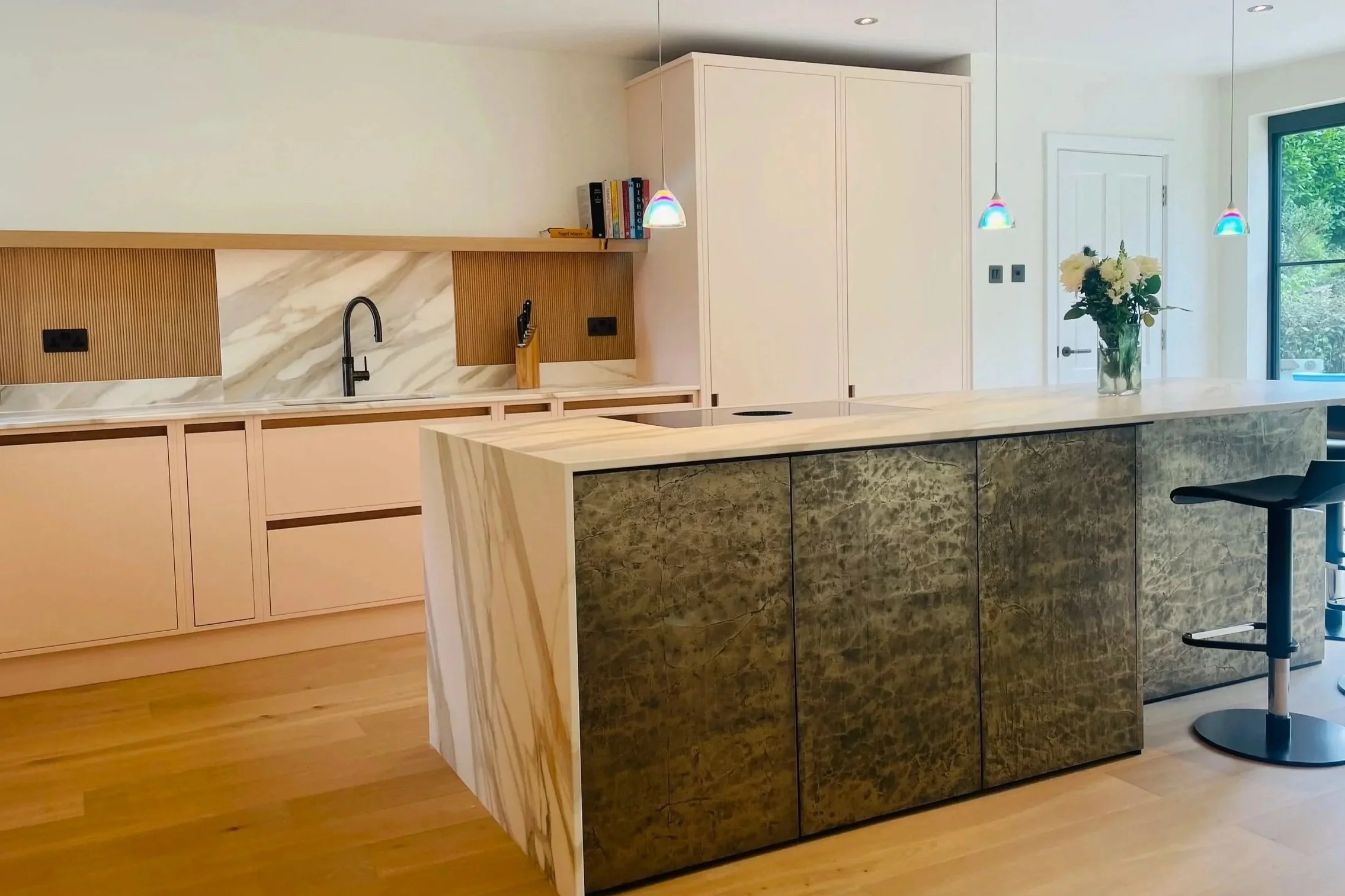
A successful kitchen design considers every material as part of a complete interior, rather than treating individual surfaces in isolation.
Flooring plays an important role in establishing the character of the room. Natural stone or porcelain can provide a durable foundation, while timber introduces warmth and a more domestic feel.
Where the kitchen opens into a dining or living space, using materials that relate to the surrounding interior helps create continuity.
Splashbacks offer an opportunity to introduce contrast or texture. Continuing the worktop material up the wall can create a calm, understated appearance, while handmade tiles bring individuality and subtle variation.
Metal finishes are equally important. Brass, bronze, stainless steel and darker-toned hardware each contribute a different character. The choice of taps, handles and lighting should feel considered, without every detail necessarily needing to match.
Light itself also changes how materials are perceived. A painted finish or natural stone that looks beautiful in daylight may take on a different character under artificial lighting, making it worth considering samples in the room wherever possible.
Balancing quality, maintenance and budget
Choosing materials for a bespoke kitchen is not simply a question of selecting the most expensive finishes.
A more considered approach is to establish where investment will have the greatest impact. A distinctive natural stone island might become the focal point of the room, while simpler, beautifully finished cabinetry elsewhere allows it to take centre stage.
Maintenance is another important consideration. Natural stone, timber, painted surfaces and engineered materials all have different requirements, and these should be understood before decisions are made.
It is also worth considering the wider costs associated with fabrication, installation and specialist detailing. The initial price of a material rarely tells the whole story.
Ultimately, the aim is to achieve the right balance between appearance, practicality and long-term value, selecting materials that will continue to feel appropriate and enjoyable to live with.
A considered approach to bespoke kitchen design
The most successful kitchens are not defined by any single material, but by the way different elements come together.
A carefully chosen combination of cabinetry, worktops, flooring and architectural detailing can create a kitchen that feels individual, balanced and entirely suited to its surroundings.
Jonathan brings more than 30 years of experience in kitchen and interior design to every project. Working directly with clients, he considers each material as part of the wider design, balancing aesthetics, practicality and budget with careful attention to detail.
Based near Sevenoaks, Kent, Jonathan designs bespoke kitchens across Kent and London, including Tunbridge Wells, Beckenham, Bromley, Clapham and Putney.
If you are considering a new kitchen, the best place to begin is with a conversation about your home, how you live and what you would like to achieve.